

Navigating the Money Supply: Your 2025 Investment Playbook
 Since the unprecedented fiscal and monetary stimulus of the early 2020s, the relationship between the money supply and the broader economy has been a central concern for investors. As we move into 2025, the focus has shifted from expansion to a period of contraction and normalization. Understanding how the Federal Reserve (the “Fed”) is managing the money supply is essential for making informed investment decisions and navigating the potential impact on stocks, inflation, and real estate.
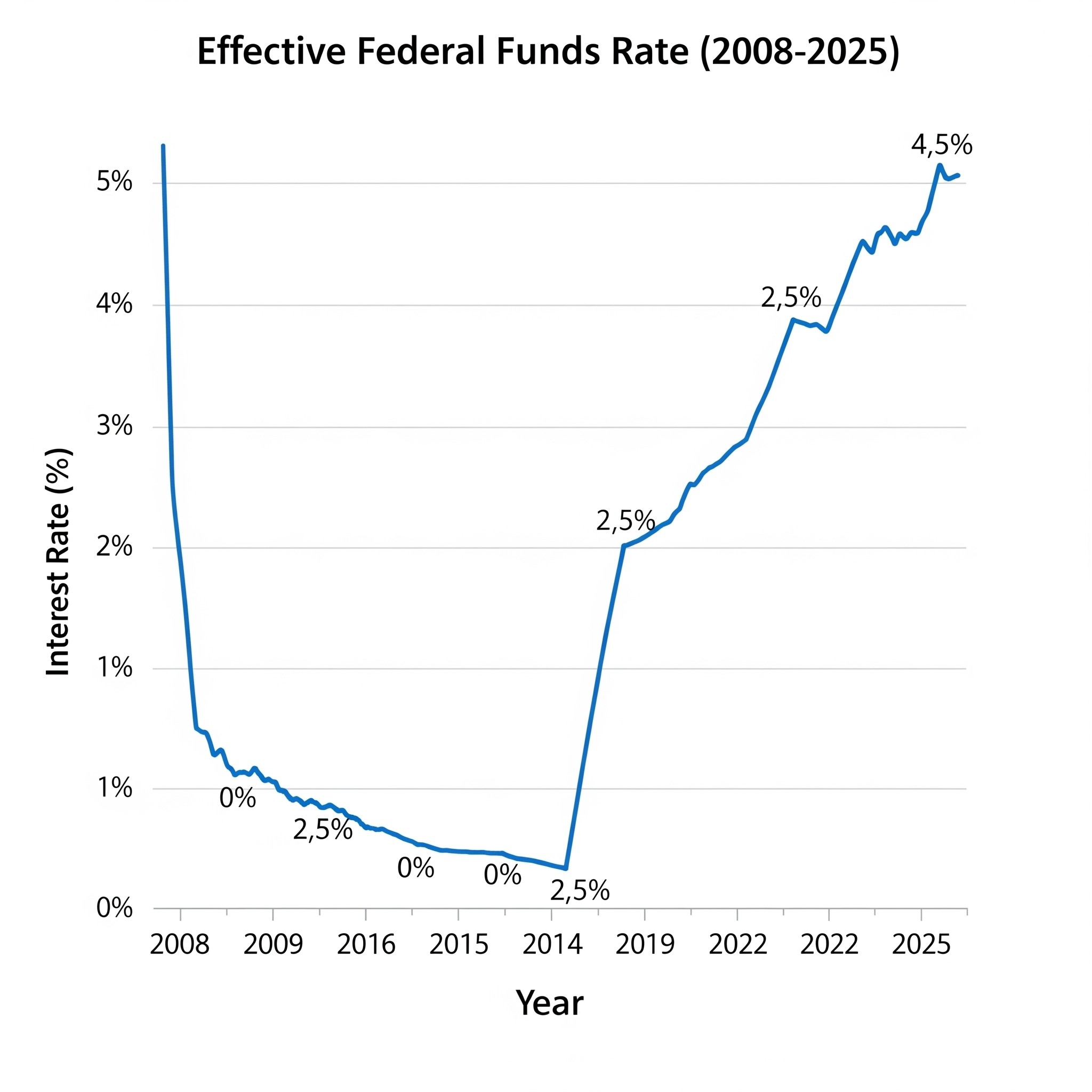
Key Periods of Interest Rate Changes
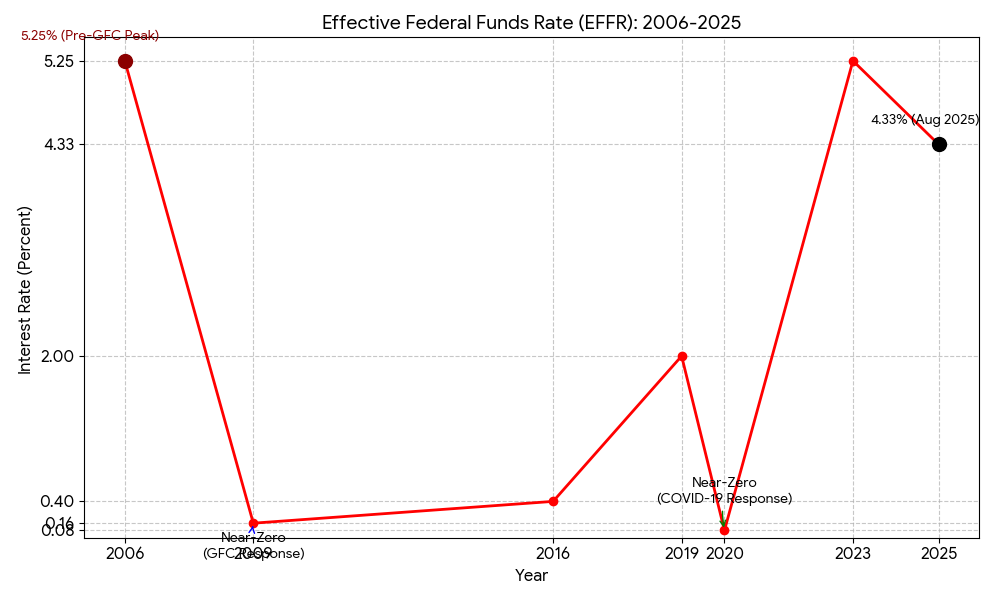
- 2008 Financial Crisis and the Great Recession: In late 2008, the Fed rapidly cut interest rates from over 2% to a range of 0.00-0.25% to stimulate the economy. This was a direct response to the housing crisis.
- The Era of Near-Zero Rates (2009-2015): The rate stayed at this historic low for seven years as the Fed worked to support economic recovery.
- Gradual Normalization (2016-2019): As the economy recovered, the Fed began a series of small, gradual rate hikes, bringing the rate up to a range of 2.25-2.50% by late 2018.
- The COVID-19 Pandemic (2020): In response to the economic shutdowns, the Fed once again made an emergency cut, bringing the rate back down to 0.00-0.25% to provide liquidity and support the economy.
- Fighting Inflation (2022-2025): As inflation soared in 2022, the Fed began its most aggressive series of rate hikes in decades. By early 2025, the rate had risen to a target range of 4.25-4.50% to cool down the economy and control inflation.
The Fed’s Shifting Monetary Policy in 2025
The money supply is the total amount of currency and liquid assets in the economy. The Federal Reserve, as the central bank, controls this supply through monetary policy tools, primarily open market operations. During the COVID-19 pandemic, the Fed aggressively expanded the money supply (M2) through quantitative easing to stimulate the economy, with the M2 money supply peaking near $22 trillion in 2022.
However, the Fed’s playbook has now shifted. Faced with persistent inflation, the central bank has been engaged in a process of quantitative tightening, actively reducing its balance sheet to shrink the money supply. This tight monetary policy has pushed the federal funds rate to around 4.33% as of September 2025, a significant increase from the near-zero rates of a few years ago. The goal is to discourage borrowing and cool down economic growth, thereby bringing inflation back to the Fed’s 2% target.
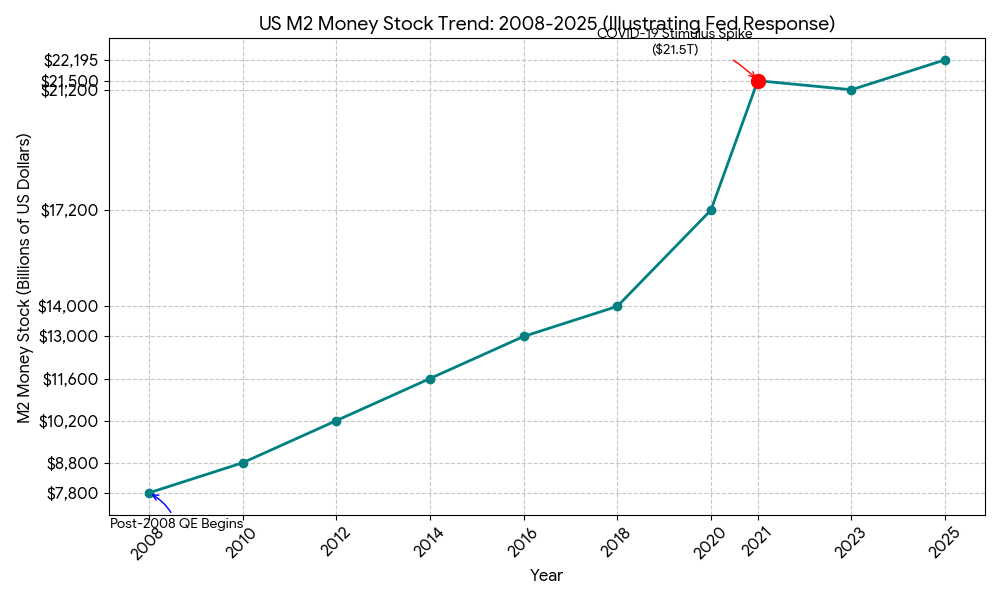
Chart: M2 is a broad measure of the money supply that includes all of the most liquid forms of money in a country’s economy. It is a key economic indicator used by central banks and economists to gauge economic health, assess potential inflationary pressures, and guide monetary policy.
“The playbook has completely changed since the pandemic. For years, the market rode a wave of easy money, but today’s investor must contend with a Fed that is actively working to reduce the money supply. This new reality requires a more selective and risk-aware approach.”
— Chuck Henrich, President & Owner
Navigating Today’s Market Conditions
The current environment of a contracting money supply and higher interest rates creates a different set of challenges and opportunities for investors.
- Impact on Equities: Historically, an expanding money supply correlated with rising stock prices. With the money supply now contracting, the market is facing a headwind. Investors are no longer flush with low-cost cash, and higher yields on safe assets like U.S. Treasuries (with 10-year yields around 4.05% as of September 2025) make them a more attractive alternative to stocks. This puts pressure on corporate earnings and may favor sectors with strong balance sheets and resilient business models.
- Real Estate: High interest rates have directly impacted the real estate market. The low mortgage rates of the early 2020s are a distant memory, and affordability has become a major concern. As the Fed continues its policy, the housing market may experience a period of stagnation or price correction, particularly in previously overheated regions.
- Inflation and the Consumer: While the Fed’s actions have slowed inflation from its peak, core inflation remains elevated. Continued high prices, coupled with higher borrowing costs, can strain consumer spending and corporate profit margins, which may affect the overall market.
The Fed’s actions are designed to reset the economy to a more stable state, but the path forward is uncertain. The era of a consistently growing money supply fueling the markets is over for now, and a new era of targeted, strategic investing has begun.
Don’t let market uncertainty disrupt your financial goals. Schedule a free, no-obligation consultation today to discuss your options. Or, give Chuck a call at (269) 323-7964 for an immediate answer to your questions. Let us help create a tailored investment strategy that accounts for today’s economic realities.
Data Sources
- Federal Reserve Economic Data (FRED): The Federal Reserve Bank of St. Louis’s FRED database is the gold standard for historical and current data on the money supply (M2), interest rates (federal funds rate), and the Fed’s balance sheet.
- U.S. Treasury Department: Provides current and historical data on Treasury yields, which are a direct reflection of interest rates and an important benchmark for investors.
This blog is created and authored by Chuck Henrich (Content Creator) and is published and provided for informational and entertainment purposes only. The information in the Blog constitutes the Content Creators own opinions and it should not be regarded as a description of services provided by Southwest Michigan Financial, LLC. The opinions expressed in the Blog are for general informational purposes only and are not intended to provide specific advice or recommendations for any individual or on any specific security or investment product. It is only intended to provide education about the financial industry. The views reflected in the commentary are subject to change at any time without notice.
Nothing on this Blog constitutes investment advice, performance data or any recommendation that any security, portfolio of securities, investment product, transaction or investment strategy is suitable for any specific person. The Content Creator and Southwest Michigan Financial, LLC assumes no responsibility or liability for any consequences resulting directly or indirectly for any action or inaction you take based on or made in reliance of the information, services or materials provided within this blog.