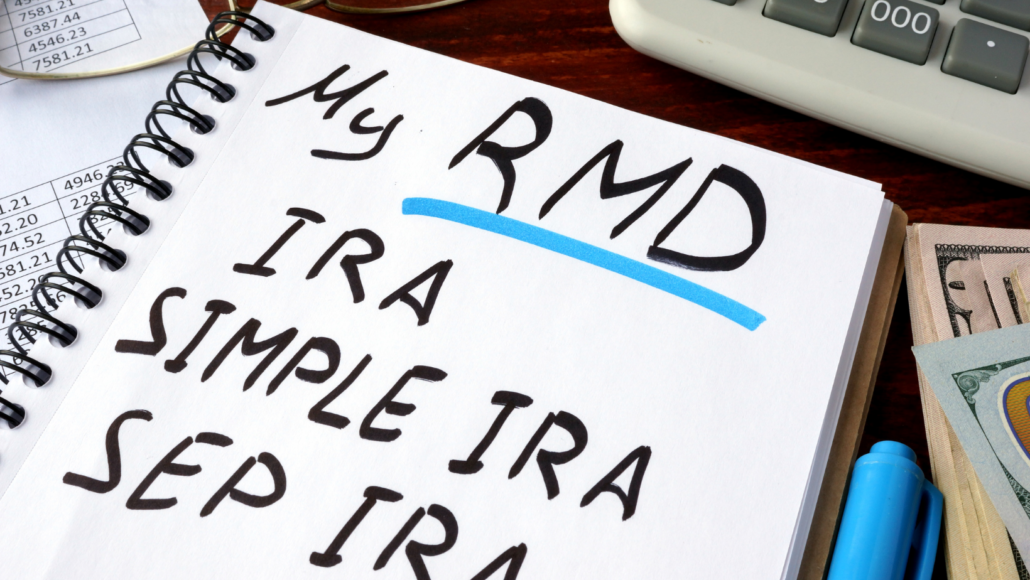
For many retirees in Kalamazoo and Marshall, reaching age 73 (or 75 for those born in 1960 or later) brings a forced financial milestone: Required Minimum Distributions (RMDs). While having a large IRA or 401(k) is a blessing, the IRS eventually demands its cut. Without a proactive strategy, these forced withdrawals can trigger a costly domino effect that impacts your Social Security, your Medicare premiums, and your overall peace of mind.
Most retirees view RMDs as a necessary evil. They may not even need the income, but the Internal Revenue Service requires withdrawals from tax-deferred retirement accounts starting in your 70s.
Without proper planning, these forced withdrawals can trigger a domino effect:
- Higher taxable income
- A larger portion of your Social Security benefits becoming taxable
- Higher Medicare premiums due to Medicare IRMAA surcharges
This issue is especially common among today’s “IRA Millionaires” — retirees with $1–$5 million in traditional IRAs or 401(k)s. Large balances mean large RMDs, and large RMDs can mean surprisingly large tax bills.
The “Tax Domino” Effect
This isn’t just about a one-time tax bill. In 2026, the stakes are higher than ever for the “IRA Millionaire.” Consider these three ways RMDs can quietly erode your retirement income:
1. They Push You Into Higher Tax Brackets
RMDs are taxed as ordinary income. When added to pensions, Social Security, interest, and investment income, they can push retirees into higher federal tax brackets. It’s not unusual to see retirees who were once in moderate brackets suddenly paying significantly more of each additional dollar to the IRS.
2. They Increase the Taxation of Social Security
Many retirees don’t realize that Social Security can be taxed — and RMDs are often the reason why.
Taxation of benefits is based on “combined income”, which includes:
- Adjusted Gross Income (AGI)
- Non-taxable interest (like municipal bonds)
- 50% of Social Security benefits
As this number rises, the taxable portion of benefits can jump from 0% to 50%, and up to 85%. RMDs count fully in this formula, meaning forced withdrawals can cause a much larger share of your Social Security to become taxable.
3. They Can Trigger Medicare IRMAA Surcharges
This is the surprise that frustrates many retirees. Higher income from RMDs can push you over Medicare income thresholds, triggering IRMAA (Income-Related Monthly Adjustment Amount).
IRMAA adds surcharges to:
- Medicare Part B (medical insurance)
- Medicare Part D (prescription drug coverage)
These surcharges are based on income from two years prior and can add hundreds — sometimes thousands — of dollars per year to healthcare costs.
“The government doesn’t care if you actually need the money from your IRA; they just want their taxes,” explains Chuck Henrich, CEO and Fiduciary Advisor at Southwest Michigan Financial LLC.
“For a lot of families, these RMDs act like a ‘stealth tax’—they don’t just tax the withdrawal itself; they reach out and tax your Social Security and raise your Medicare costs, too.”
The Planning Opportunity: Don’t Wait Until 73
The Planning Opportunity Most People Miss
The key issue isn’t just RMDs — it’s the lack of planning before they begin. Once RMD age arrives, your flexibility shrinks. By being proactive, you can regain control over your tax bill through strategies like:
- Roth Conversions: Moving money into a Roth IRA during lower-income years to eliminate future RMDs.
- Qualified Charitable Distributions (QCDs): Sending up to $111,000 in 2026 directly from your IRA to a charity, which satisfies your RMD without adding a dime to your taxable income.
- Tax-Efficient Sequencing: Choosing which accounts to draw from first to keep your total income below IRMAA and Social Security tax thresholds.
“We always tell our clients that retirement is a 30-year journey, not a 1-year sprint,” quips Chuck. “We want to do the ‘Main Street Math’ today so you aren’t stuck with an avoidable tax bill ten years from now. It’s about keeping more of what you earned so you can pass it on to your family, not the IRS.”
The goal isn’t just to lower taxes this year—it’s to reduce lifetime taxes and avoid Medicare premium surprises.
Large retirement accounts are a blessing—but without strategy, they can quietly create a tax problem that compounds every year.
If you’d like help building a retirement income strategy designed to manage future RMDs and reduce unnecessary taxes, contact Chuck Henrich at Southwest Michigan Financial to start the conversation.
Sources & Citations
Regulatory Data: CMS Publication “Medicare and Other Health Benefits: Who Pays First?” (2026).
Tax Code: IRS Publication 969 (HSA Eligibility and Medicare).
Local Resource: Region 3A & 3B Area Agency on Aging (Southwest Michigan).